The Woman They Could Not Erase
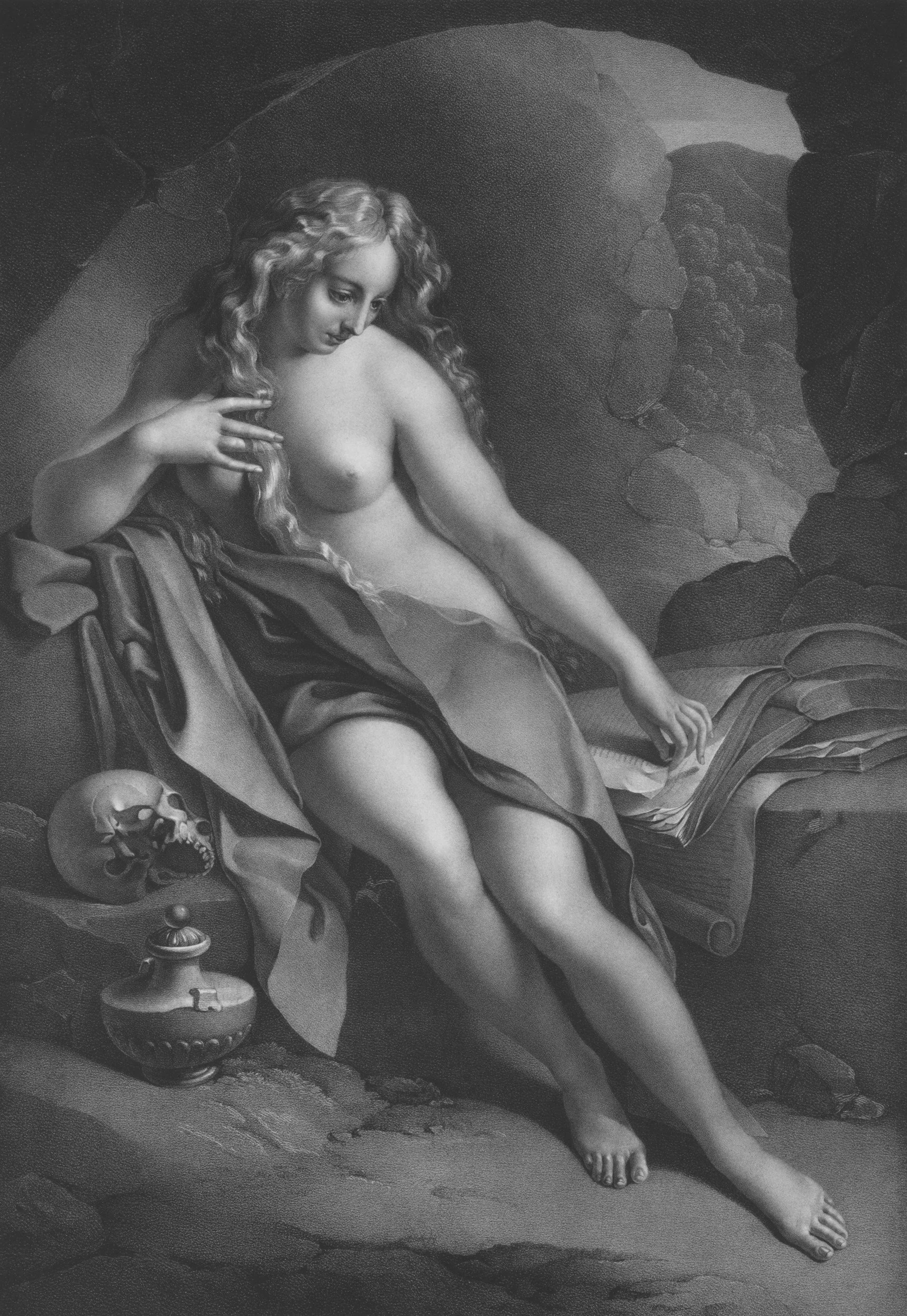
There is a woman at the center of the most
influential story ever told. She stood at the
cross when the men fled. She arrived first at
the empty tomb. She was the one he told first.
And yet, for nearly two thousand years,
her name has been dragged through the dust.
This Easter, we return her to her rightful place.
The One He Trusted Most
Let’s start with what we actually know.
Mary Magdalene traveled with Jesus throughout his ministry. She funded it—along with a small group of other women—from her own resources, a detail quietly tucked into the Gospel of Luke (8:2–3) that has rarely been given its proper weight. She was not a woman on the margins. She was a woman at the center: present at the crucifixion, present at the burial, and the first human being to encounter the risen Christ on Easter morning.
That last fact is not a minor footnote. In the culture of first-century Roman Judea, women were not considered credible witnesses. Their testimony held no legal standing. And yet, the gospel accounts place a woman as the sole first witness to the event that would become the foundation of an entire world religion. Had the story been fabricated, scholars note, no one inventing a resurrection account in that era would have chosen a woman as the witness. The very inconvenience of it is what makes it ring true.
Jesus sent her to tell the others. “Go,” he said, “and tell my brothers.” She was, by definition, the first apostle—the first one sent forth, and early Church Fathers knew it. Thomas Aquinas named her Apostola Apostolorum: the Apostle to the Apostles. The title was reinstated by Pope John Paul II in 1988, and Pope Francis elevated her feast day in 2016, formally recognizing what had long been buried. The Eastern Orthodox Church, for its part, never forgot. She has always been honored there as Equal to the Apostles.
She was not a devoted admirer watching from a distance. She was, as Magdalene leading scholars at FutureChurch describe her, the primary witness to the most central events of the Christian faith. She wasn’t just in the room, she was the room.
He Saw Her Differently
What made the relationship between Jesus and Mary Magdalene remarkable was not romance—it was recognition.
The non-canonical gospels, many of them discovered in Egypt in 1945 as part of the Nag Hammadi library, paint a picture that the canonical Bible only hints at: Jesus trusted her with a depth of spiritual understanding he did not extend to others. The Gospel of Philip describes her as his companion and states plainly that he loved her more than the other disciples. The Gospel of Mary, her own gospel (which we will come to) depicts her not as a follower receiving instruction, but as someone who understood in a way the others simply did not.
What she understood was the bigger picture. Where the apostles were concrete thinkers, grounded in action and mission, Mary appeared to see the meaning beneath the meaning. In the Gospel of Mary, she steps in after Jesus departs to calm and comfort a group of grieving, frightened disciples. She does not grieve in the same way. As the scene unfolds, she has already internalized what he was teaching at a level that steadied her. She then shares a vision and a teaching, naturally moving into the space of leadership.
One ancient scholar studying these texts observed that her role in the Gospel of Mary shows her as “moving into Jesus’s place of leadership”, and by doing so, extending his teaching with such fluency and depth that her spiritual advancement was evident even to those who resisted it.
He knew this about her. He chose her, specifically, to carry the most important message in history forward.
Not Peter. Not John. Mary.
The Gospel They Buried
Here is the part of the story that should make every woman sit up.
There exists a Gospel of Mary. It is her gospel, her teachings, her vision, her voice. It was discovered in Egypt in 1896, part of a collection called the Berlin Codex, and it offers a window into a version of early Christianity that was deliberately suppressed. The text was likely written in the second century, making it one of the earliest unofficial Christian writings in existence.
In it, Mary shares a private teaching that Jesus entrusted to her alone. She speaks with clarity and authority. She leads.
And then Peter objects.
“Did the Savior really speak with a woman without our knowledge?” he asks in the text. “Are we to turn about and all listen to her? Did he prefer her to us?”
The tension recorded in the Gospel of Mary is not just a personal rivalry. Scholar Therasa Topete, writing for the University of California, argues that this text was excluded from the Bible not because it was spiritually unorthodox, but because its inclusion would have meant acknowledging women’s rightful place in positions of spiritual authority. The church was consolidating power, building hierarchy, and a gospel that placed a woman above Peter in knowledge and favor was not compatible with what they were constructing.
So they left it out.
And then, in 591 AD, Pope Gregory the Great delivered a sermon that did something even more damaging: he conflated Mary Magdalene with an unnamed sinner in the Gospel of Luke—a woman described as a prostitute—despite there being no scriptural basis for the connection whatsoever. That single sermon cemented her false identity in Western Christianity for nearly 1,400 years. By turning her into a prostitute, one scholar explains, she is not as important. She couldn’t have been a leader. That was precisely the point.
The woman who funded a ministry, stood at the cross, and carried the resurrection forward was reduced to a lowly sinner. Her own gospel was buried. Her name was muddied. And the world moved on without her.
The Woman Who Carried the Flame
This Easter Sunday, as the story of resurrection moves through the air, there is something worth remembering that has nothing to do with religion and everything to do with truth.
A woman was there first. A woman understood first. A woman was chosen to carry the word forward. And for two thousand years, the very people who built an entire civilization on her testimony did their best to make sure no one knew her name.
Mary Magdalene’s name, in Hebrew, derives from the word magdal, meaning tower. She was, in the oldest sense of the word, a tower: a point of strength, elevation, and visibility in an era that preferred women to be invisible.
What her story asks us to consider is not theological. It is historical. And most importantly, it is personal. Feminine wisdom, intuitive sight, the ability to hold steadiness while others panic, to see the meaning beneath the moment, these were not radical gifts. They were recognized gifts. They were trusted gifts. They were simply gifts that a consolidating, hierarchy-building power structure eventually found inconvenient.
The inconvenient ones have a way of being erased. And they have a way of coming back.
She was not a supporting character in someone else’s story. She was, as she has always been, a woman writing the story itself.
Sources: Wikipedia (Mary Magdalene, Gospel of Mary); History.com; FutureChurch.org; BartEhrman.com; EarlyChristianTexts.com; Vatican News; Know Your Mothers